 CHINA 5A TRAVEL
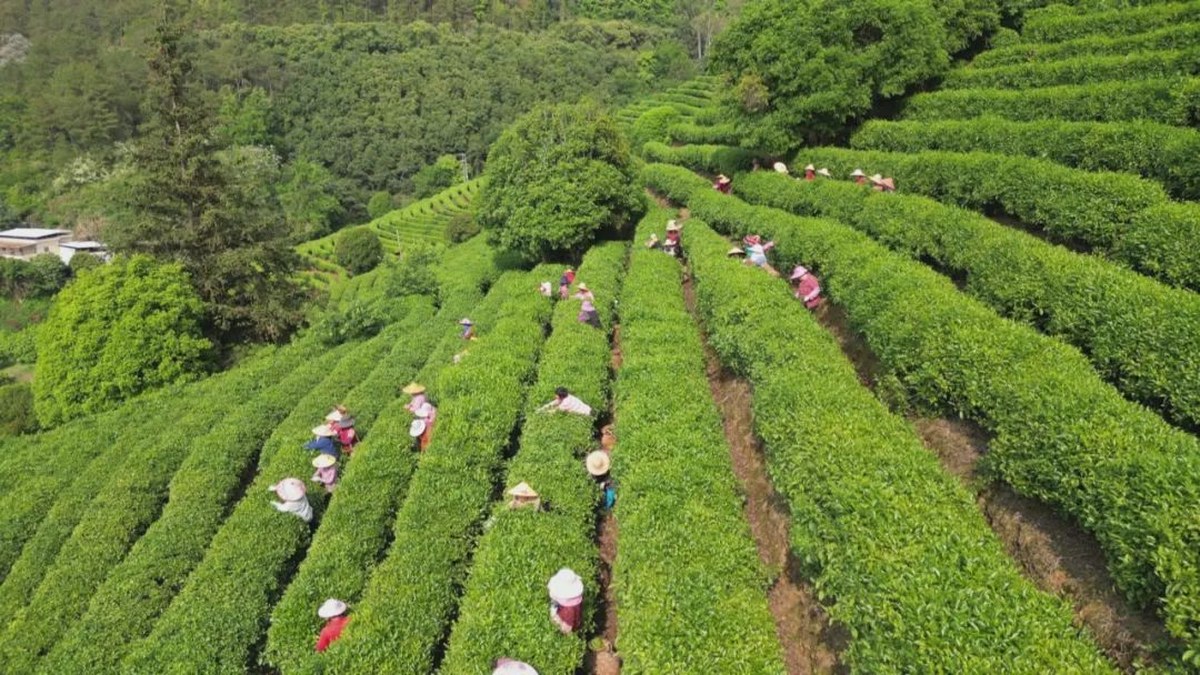
Eastern Guangdong's first 5A — 667 ha of Hakka hills where terraced oolong tea fields, a Luban-Prize roundhouse hotel and a Ming-era village share one ticket.
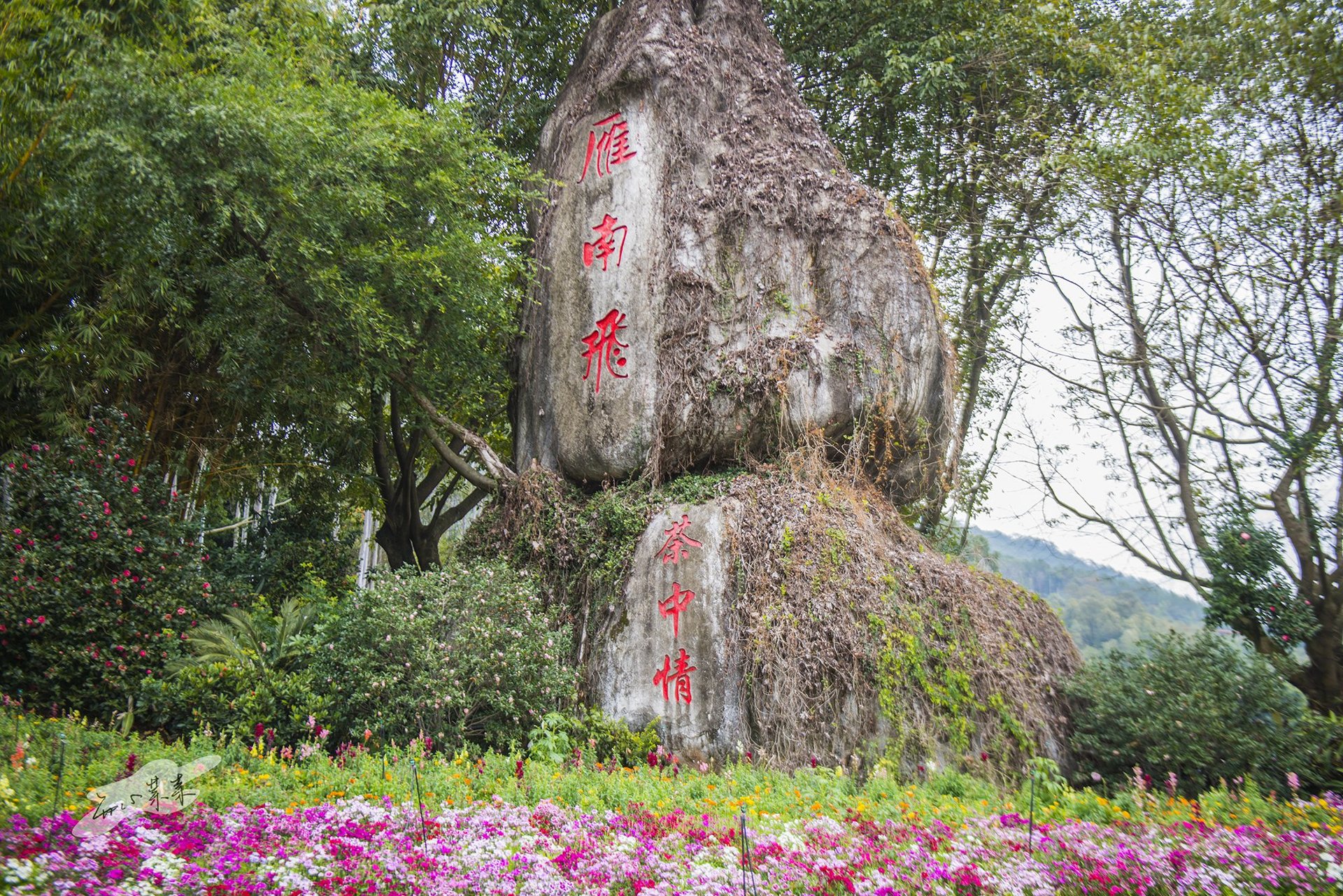
The name says everything: Yannanfei — "wild geese flying south" — honors the great Hakka migration that carried a northern people into the hills of Meizhou, and its twin phrase "affection in tea" (茶中情) is carved into the landmark stone at the gate. Laid out from 1995 on the flanks of Yinna Mountain in Yanyang Town, the hometown of Marshal Ye Jianying, the resort opened in October 1997, became eastern Guangdong's first 4A in 2001 and its first 5A in 2011 — still the region's flagship. Chinese media call it the "Shangri-La of the Hakka world", and few who stand on its ridge at dawn argue.
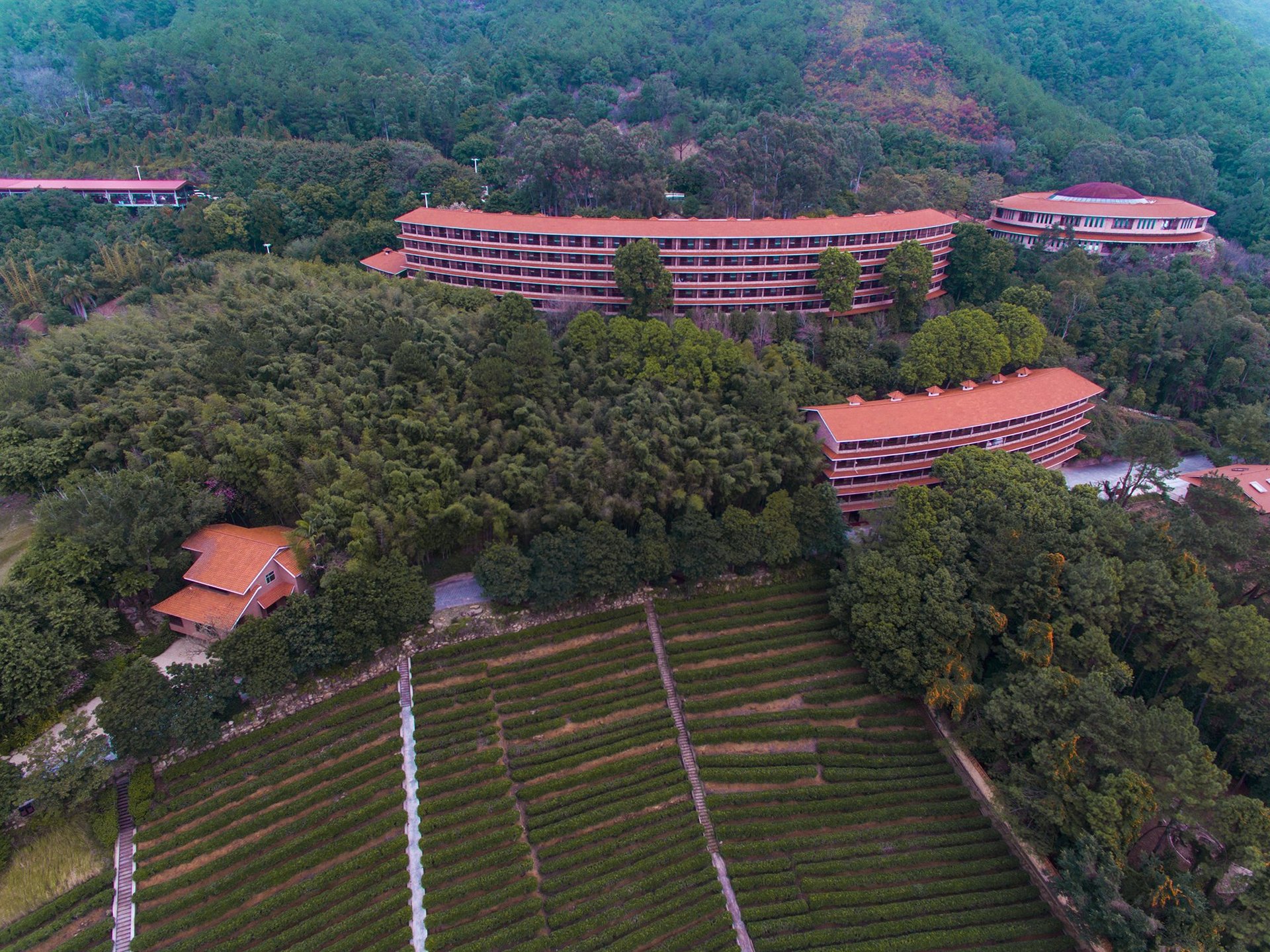
The numbers behind the postcard: 667 hectares across two zones, anchored by roughly 2,600 mu (~173 ha) of tea terraces planted mainly in Baiye Dancong oolong, stepping down the hillsides in emerald bands that wind like a jade necklace beneath the hill-crowning hotel. A 3.2-km wooden boardwalk threads the rows past named scenes — "tea altar morning glow", "four-season tea fields" — while Yan'e Lake holds Grade-I drinking water in a bowl of green, the Hundred Flowers Garden re-colors with some 600,000 pots a year, and the Variety Grand Garden grows 840-plus tea cultivars gathered from 13 provinces and from India, Japan and Georgia. On the flank, Longna Mountain Ecological Valley keeps prime secondary forest, protected tree ferns and a 168-m cascading waterfall.
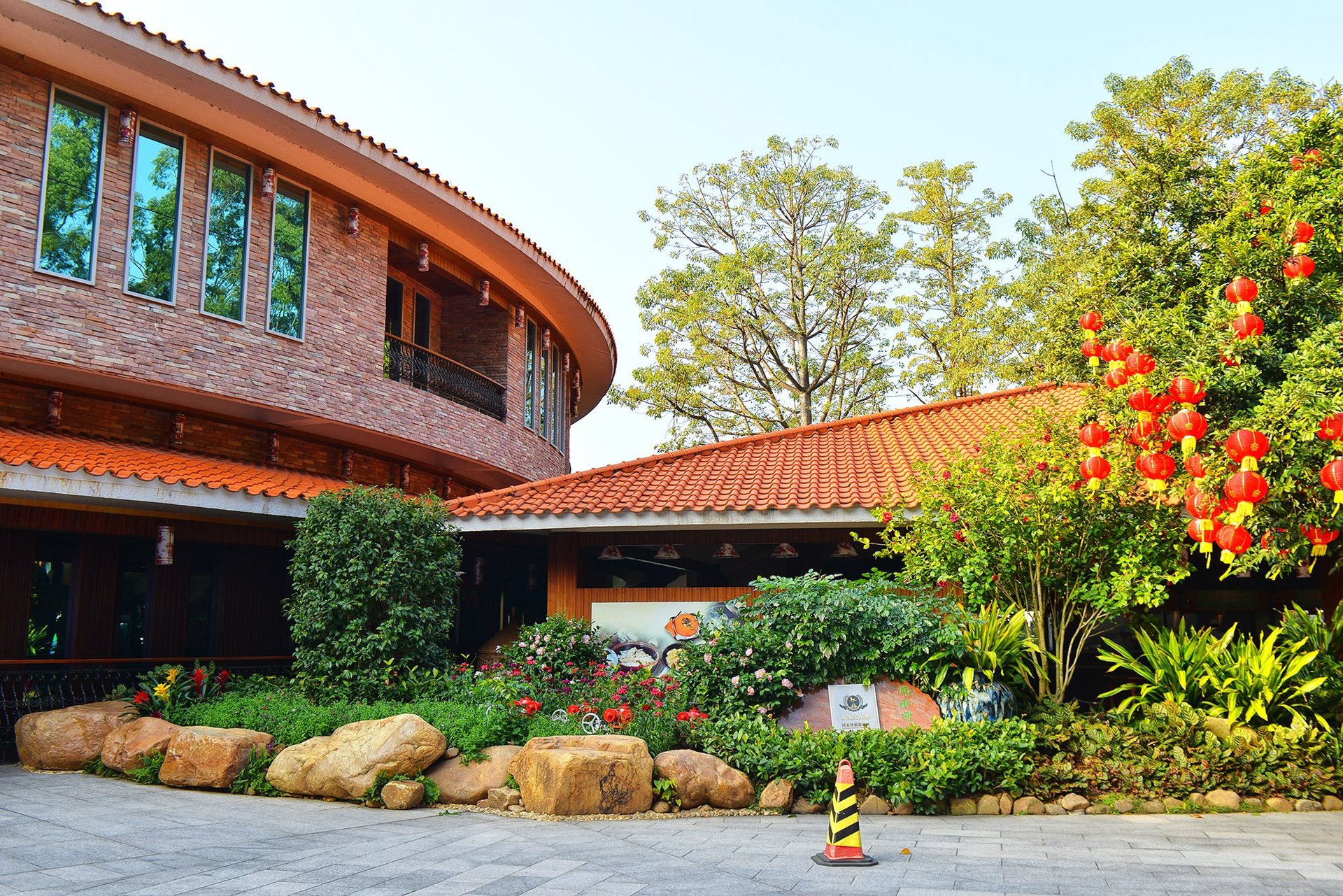
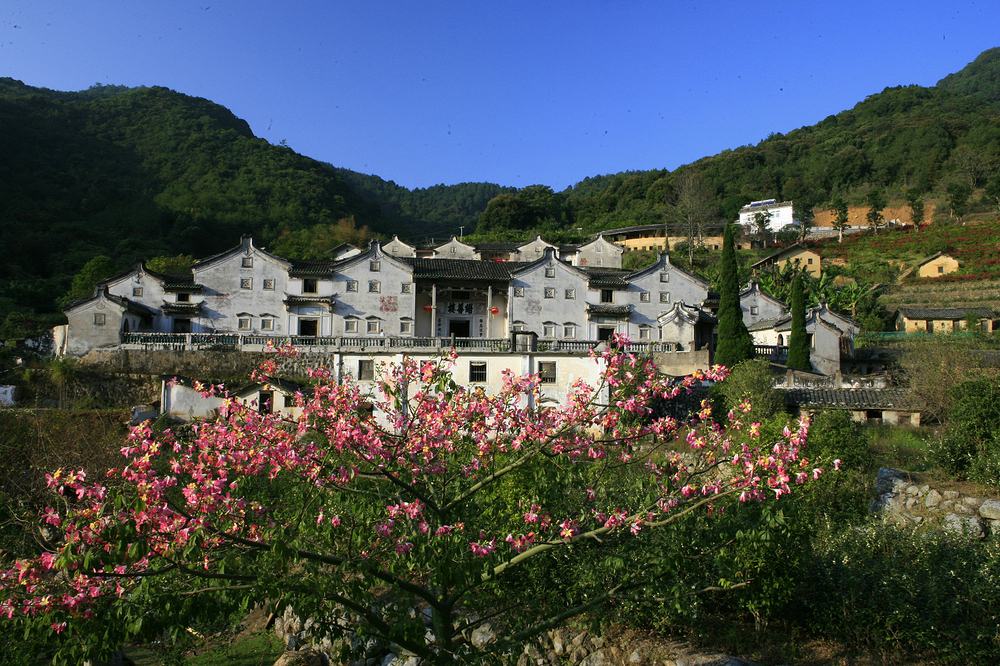
Yannanfei is Hakka to the bone: the Weilong Grand Hotel reinterprets the round-dragon house (围龙屋) so faithfully that it won China's top construction award, the Luban Prize, in 2005, and all 138 rooms open onto tea-field balconies; the roundhouse Weilong Restaurant inlays its dome with 99,999 bamboo tubes and stages Hakka mountain songs and tea-picking dances at meal seatings. Tea masters perform the 18-step gongfu ceremony, tastings at three pavilions are genuinely free, and in season you can pick leaves yourself and follow them through the working tea factory. The same ticket also unlocks Qiaoxi Ancient Village, a Ming-era hamlet of 16 Qing-dynasty mansions strung along a forest stream.
Highlights
Terraced Tea Fields & Boardwalk
About 2,600 mu of Baiye Dancong oolong stepping down the hillsides — walk the 3.2-km boardwalk for the "sea of tea" and its morning mist.
Weilong Grand Hotel
A Luban-Prize roundhouse terraced into the hillside; every one of its 138 rooms faces the tea fields, best from floors five and six.
Hakka Song & Dance over Dinner
The in-house folk-song troupe fills the roundhouse Weilong Restaurant with mountain songs, tea-picking dances and the spinning cup-flower dance at lunch and dinner seatings.
Gongfu Tea Ceremony
An 18-step brewing-and-tasting ritual — 12 steps to brew, 6 to savor — performed in the gardens and pavilions, with free tasting alongside.
Tea Variety Grand Garden
A living encyclopedia of 840-plus tea cultivars from 13 provinces and abroad, beside more than a thousand camellia varieties.
Qiaoxi Ancient Village
Sixteen Qing-dynasty Hakka mansions — Jishan and Baoshan buildings foremost — set along a stream with wooden walkways, included on the same ticket.
Photo Gallery
Comments